
What Is the Difference Between Balayage, Ombre, and Highlights?
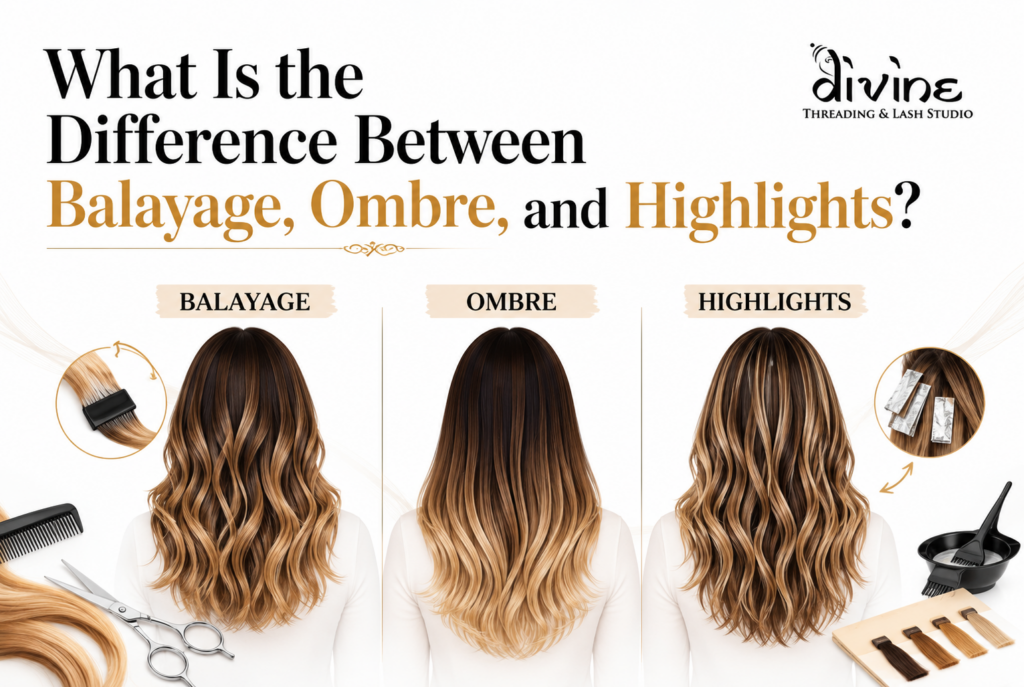
Visit every salon and tell them “I want balayage,” and most likely you’ll receive the same response: a smile. However, ask five individuals what “balayage” really means in reality, and you’ll get five distinct answers. Some of which refer to ombre, as well as a couple that refer to typical highlights. It happens all the time, but it’s not because the clients don’t pay at all. The reason is that these three methods actually do have a lot in common with what they create, despite the methodology behind each being distinct. If you’ve ever had to leave the salon after a session, not sure if you wanted to ask for what you really want, you’re not alone. Knowing the difference between these methods means that you’ll be able to walk into the next appointment knowing precisely the type of service you’d like instead of relying on the fact that the stylist can read your thoughts through a simple Pinterest picture. A hair salon Las Vegas, NV, clients have relied on for everything from small changes in color to complete transforms. Divine Threading gets this most of the time in every appointment, and we’ll take it apart in a clear manner. Highlights: The Foundation Technique Everything Else Builds On Highlights are the earliest and simplest of the three. It involves cutting hair, then applying lighter to each strand, typically using foils that separate the sections and regulate the amount of lifting the color will receive. Since foils hold heat and block the color from leaking to the hair surrounding it, highlights result in a more consistent, predictable design, with lighter strands distributed evenly throughout the hair. Usually, they begin closer to the roots. This precision is the reason highlights work well when clients want uniform, all-over brightness as a gradual shift in color. Highlights are also the most straightforward method to alter with regard to the placement of big, chunky frames for the face, as well as subtle lighting throughout or traditional full-head highlights to create an incredibly light look overall. It’s a compromise to maintain. Since highlights usually begin near the root, any regrowth will become apparent earlier. This usually requires touch-ups every 6-8 weeks to keep the lines looking natural rather than matured out. Ombre: A Deliberate, Two-Tone Transition Ombre takes a completely different approach. Instead of strands in a single strand, the ombre effect is a sharp and deliberate shift between a darker hue at the base and a noticeably lighter hue toward the edges. What makes it unique is that this transition is designed to be apparent, shifting between different shades instead of blending in seamlessly. Ombre is an excellent choice for anyone looking to add the look of a larger area without having to do root maintenance. Since the color shift occurs from mid-shaft to the end, rather than beginning at the root, any regrowth will be much less obvious, which results in significantly longer intervals between visits to the salon compared with traditional highlights. What makes ombre distinct from Balayage lies in the intensity of its transition line. Ombre is purposely more graphic and distinct, while balayage aims for something much softer. Balayage: Hand-Painted, Sun-Kissed, and Deliberately Imperfect Balayage, derived from the French word that means “to sweep,” is an art of hand painting where the color is painted freehand on the hair’s surface instead of using foils or a precise line of sectioning. The lightener is applied using varying levels of pressure and intensity, creating a subtle gradient effect that resembles how natural lightening of hair occurs due to sun exposure. It’s the main distinction that differentiates balayage from highlights and ombre because there’s no rigid design. Every arrangement is tailored to suit the person’s personal hair movement, facial shape, and preferred level of contrast. This is precisely why no two balayage effects are alike, even with identical hair colors. Balayage can also be one of the most low-maintenance options among the three because it is painted by hand, avoiding the hard roots almost completely, which allows regrowth to mix naturally over time in most situations. A Side-by-Side Comparison to Make the Choice Easier Consideration Highlights Ombre Balayage Method for application Sections oiled with oil Blends with two shades that are divided Freehand, hand-painted Maintenance of the root Regular (6 from 6 to 8 weeks) Minimal Very low to minimal All-around style Even structured light A bold, well-defined transition Soft, natural gradient Best for All-over lightness, precise placement Dramatic dimensions with lower upkeep Natural, sun-kissed dimension Regrowth visibility Noticeable sooner Not as noticeable Blends slowly Common Mistakes Clients Make When Requesting These Looks How to Choose the Right Technique for Your Hair Goals Instead of directing with the title of your technique, it is more beneficial to be able to communicate your real objectives: A thorough consultation ought to go through these issues prior to talking about a particular technique’s name, as what is considered to be the “right” answer depends more on the maintenance level you’re comfortable with and your desired appearance rather than which phrase is most popular. Finding the Right Stylist Makes All the Difference The technique is important, but the execution also matters. The art of balayage is one art that is extremely different among stylists because it depends exclusively on freehand technique, instead of an easily repeatable foiling style. If you’re looking for the best hair stylist in Vegas, make sure you look at actual balayage and the ombre style in their portfolio. Not just photographs of the finished product, because the placement and mixing make a difference between a natural and natural look and one that appears to be choppy or disorganized. Divine Threading has built an enviable reputation with clients searching for a hairdresser within LV who knows the art of matching the style to your hair’s type and not only replicates the look of a trending image. Each consultation begins with your hair’s texture, the growth pattern, and the amount of maintenance that is in